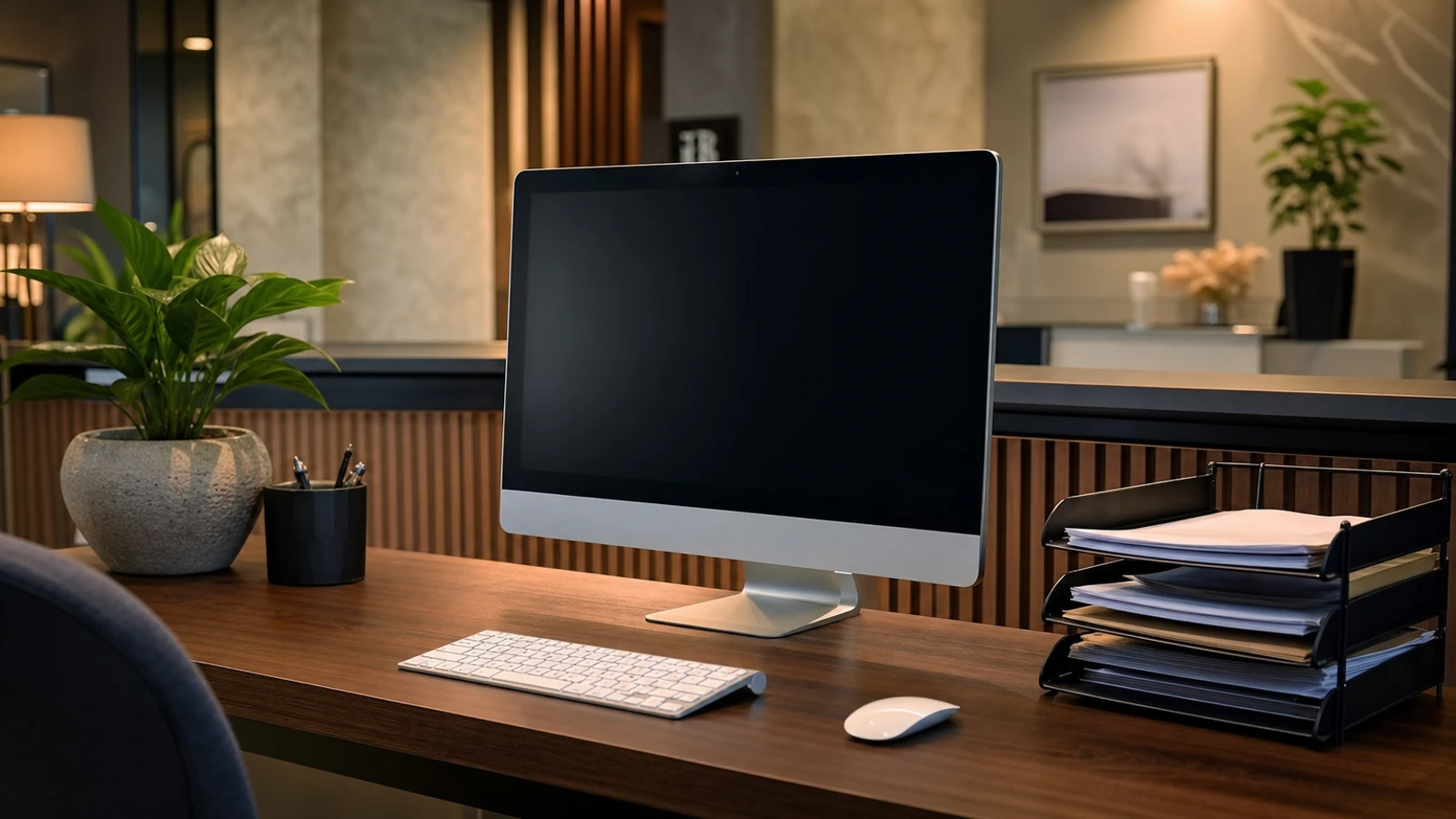
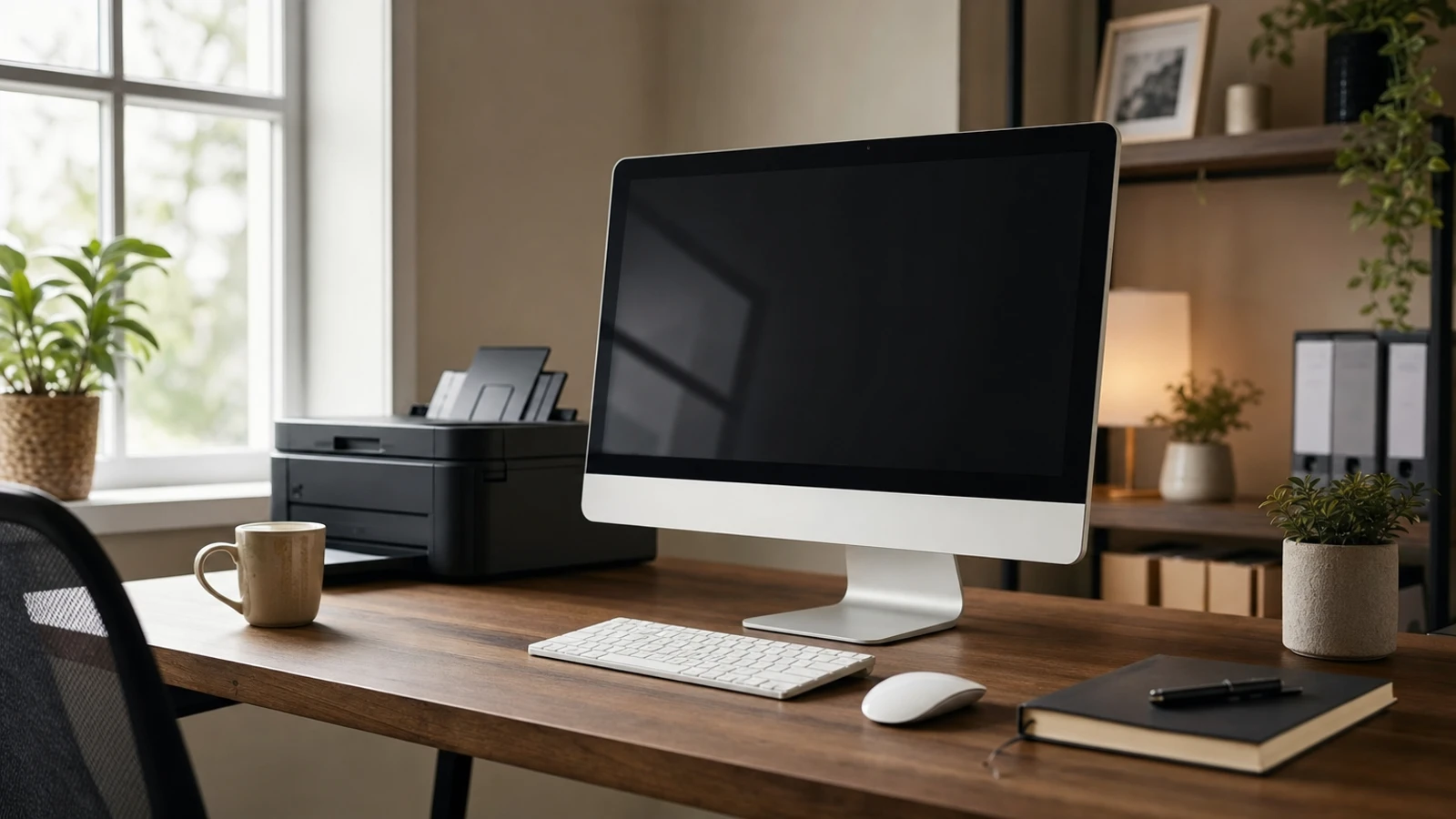
This support page focuses on screen size, ergonomics, and front-desk comfort for all-in-one office computers. The main shortlist covers products; this page keeps the setup decisions practical.
Screen Size, Ergonomics, and Front-Desk Comfort
Treat the screen as furniture. An all-in-one computer puts the display, speakers, camera, and computer body in one object, so screen size changes the whole desk. A 24-inch model can suit reception counters and narrow offices, while larger screens help spreadsheets, scheduling systems, and side-by-side documents.
Height adjustment matters. Many all-in-ones look elegant but offer limited stand movement. Check tilt, height, swivel, and whether a monitor riser is needed, especially if several employees share the station.
Glare affects public-facing desks. Front desks, clinics, shops, and small offices often have windows and overhead lights. A bright display with manageable reflections can reduce squinting and awkward screen angles.
Keyboard distance still counts. Because the computer is inside the display, the screen often sits closer than a separate monitor. Leave room for keyboard, mouse, paperwork, card reader, and customer-facing items.
Shared comfort is practical. Small businesses rotate users. Choose a setup that can be adjusted quickly rather than one that only fits the person who installed it.
Small-office decision notes
Small-business scenario 1: Treat the screen as furniture. Recheck this point against the real station because an all-in-one computer puts the display, speakers, camera, and computer body in one object, so screen size changes the whole desk. a 24-inch model can suit reception counters and narrow offices, while larger screens help spreadsheets, scheduling systems, and side-by-side documents. The best all-in-one should reduce clutter while keeping the office easy to run, share, clean, and support.
Desk planning cue 1. For screen size, ergonomics, and front-desk comfort, sketch the counter, customer side, printer, scanner, card reader, phone, paperwork tray, chair, outlet, and network path. If the layout makes one everyday task awkward, compare a different screen size, stand, or port arrangement.
Return-window test 1. Install real business tools, connect every peripheral, run a video call, print a sample document, restart after updates, and let the normal user try it. That trial is more useful than judging the machine from an empty desktop.
Support note 1. Write down login handoff, backup location, printer settings, service contact, and replacement plan. If screen size, ergonomics, and front-desk comfort matters to the station, simple documentation keeps the elegant computer from becoming a mystery when something changes.
Budget check 1. Compare the sticker price with the practical extras: surge protection, external backup, barcode scanner, receipt printer, privacy screen, keyboard, mouse, service plan, and downtime plan. An all-in-one is efficient only when the surrounding kit supports the way the business actually works.
Staff handoff 1. Ask whether a new employee could sit down, find the needed apps, adjust the screen, answer a call, print a form, and lock the station without special coaching. For screen size, ergonomics, and front-desk comfort, that handoff test keeps the decision grounded in small-business efficiency rather than showroom simplicity.
Small-business scenario 2: Height adjustment matters. Recheck this point against the real station because many all-in-ones look elegant but offer limited stand movement. check tilt, height, swivel, and whether a monitor riser is needed, especially if several employees share the station. The best all-in-one should reduce clutter while keeping the office easy to run, share, clean, and support.
Desk planning cue 2. For screen size, ergonomics, and front-desk comfort, sketch the counter, customer side, printer, scanner, card reader, phone, paperwork tray, chair, outlet, and network path. If the layout makes one everyday task awkward, compare a different screen size, stand, or port arrangement.
Return-window test 2. Install real business tools, connect every peripheral, run a video call, print a sample document, restart after updates, and let the normal user try it. That trial is more useful than judging the machine from an empty desktop.
Support note 2. Write down login handoff, backup location, printer settings, service contact, and replacement plan. If screen size, ergonomics, and front-desk comfort matters to the station, simple documentation keeps the elegant computer from becoming a mystery when something changes.
Budget check 2. Compare the sticker price with the practical extras: surge protection, external backup, barcode scanner, receipt printer, privacy screen, keyboard, mouse, service plan, and downtime plan. An all-in-one is efficient only when the surrounding kit supports the way the business actually works.
Staff handoff 2. Ask whether a new employee could sit down, find the needed apps, adjust the screen, answer a call, print a form, and lock the station without special coaching. For screen size, ergonomics, and front-desk comfort, that handoff test keeps the decision grounded in small-business efficiency rather than showroom simplicity.
Small-business scenario 3: Glare affects public-facing desks. Recheck this point against the real station because front desks, clinics, shops, and small offices often have windows and overhead lights. a bright display with manageable reflections can reduce squinting and awkward screen angles. The best all-in-one should reduce clutter while keeping the office easy to run, share, clean, and support.
Desk planning cue 3. For screen size, ergonomics, and front-desk comfort, sketch the counter, customer side, printer, scanner, card reader, phone, paperwork tray, chair, outlet, and network path. If the layout makes one everyday task awkward, compare a different screen size, stand, or port arrangement.
Return-window test 3. Install real business tools, connect every peripheral, run a video call, print a sample document, restart after updates, and let the normal user try it. That trial is more useful than judging the machine from an empty desktop.
Support note 3. Write down login handoff, backup location, printer settings, service contact, and replacement plan. If screen size, ergonomics, and front-desk comfort matters to the station, simple documentation keeps the elegant computer from becoming a mystery when something changes.
Budget check 3. Compare the sticker price with the practical extras: surge protection, external backup, barcode scanner, receipt printer, privacy screen, keyboard, mouse, service plan, and downtime plan. An all-in-one is efficient only when the surrounding kit supports the way the business actually works.
Staff handoff 3. Ask whether a new employee could sit down, find the needed apps, adjust the screen, answer a call, print a form, and lock the station without special coaching. For screen size, ergonomics, and front-desk comfort, that handoff test keeps the decision grounded in small-business efficiency rather than showroom simplicity.
Small-business scenario 4: Keyboard distance still counts. Recheck this point against the real station because because the computer is inside the display, the screen often sits closer than a separate monitor. leave room for keyboard, mouse, paperwork, card reader, and customer-facing items. The best all-in-one should reduce clutter while keeping the office easy to run, share, clean, and support.
Desk planning cue 4. For screen size, ergonomics, and front-desk comfort, sketch the counter, customer side, printer, scanner, card reader, phone, paperwork tray, chair, outlet, and network path. If the layout makes one everyday task awkward, compare a different screen size, stand, or port arrangement.
Return-window test 4. Install real business tools, connect every peripheral, run a video call, print a sample document, restart after updates, and let the normal user try it. That trial is more useful than judging the machine from an empty desktop.
Support note 4. Write down login handoff, backup location, printer settings, service contact, and replacement plan. If screen size, ergonomics, and front-desk comfort matters to the station, simple documentation keeps the elegant computer from becoming a mystery when something changes.
Budget check 4. Compare the sticker price with the practical extras: surge protection, external backup, barcode scanner, receipt printer, privacy screen, keyboard, mouse, service plan, and downtime plan. An all-in-one is efficient only when the surrounding kit supports the way the business actually works.
Staff handoff 4. Ask whether a new employee could sit down, find the needed apps, adjust the screen, answer a call, print a form, and lock the station without special coaching. For screen size, ergonomics, and front-desk comfort, that handoff test keeps the decision grounded in small-business efficiency rather than showroom simplicity.
Small-business scenario 5: Shared comfort is practical. Recheck this point against the real station because small businesses rotate users. choose a setup that can be adjusted quickly rather than one that only fits the person who installed it. The best all-in-one should reduce clutter while keeping the office easy to run, share, clean, and support.
Desk planning cue 5. For screen size, ergonomics, and front-desk comfort, sketch the counter, customer side, printer, scanner, card reader, phone, paperwork tray, chair, outlet, and network path. If the layout makes one everyday task awkward, compare a different screen size, stand, or port arrangement.
Return-window test 5. Install real business tools, connect every peripheral, run a video call, print a sample document, restart after updates, and let the normal user try it. That trial is more useful than judging the machine from an empty desktop.
Support note 5. Write down login handoff, backup location, printer settings, service contact, and replacement plan. If screen size, ergonomics, and front-desk comfort matters to the station, simple documentation keeps the elegant computer from becoming a mystery when something changes.
Budget check 5. Compare the sticker price with the practical extras: surge protection, external backup, barcode scanner, receipt printer, privacy screen, keyboard, mouse, service plan, and downtime plan. An all-in-one is efficient only when the surrounding kit supports the way the business actually works.
Staff handoff 5. Ask whether a new employee could sit down, find the needed apps, adjust the screen, answer a call, print a form, and lock the station without special coaching. For screen size, ergonomics, and front-desk comfort, that handoff test keeps the decision grounded in small-business efficiency rather than showroom simplicity.
Use the hub and related support pages to compare integrated-computer details before replacing or adding a business workstation.