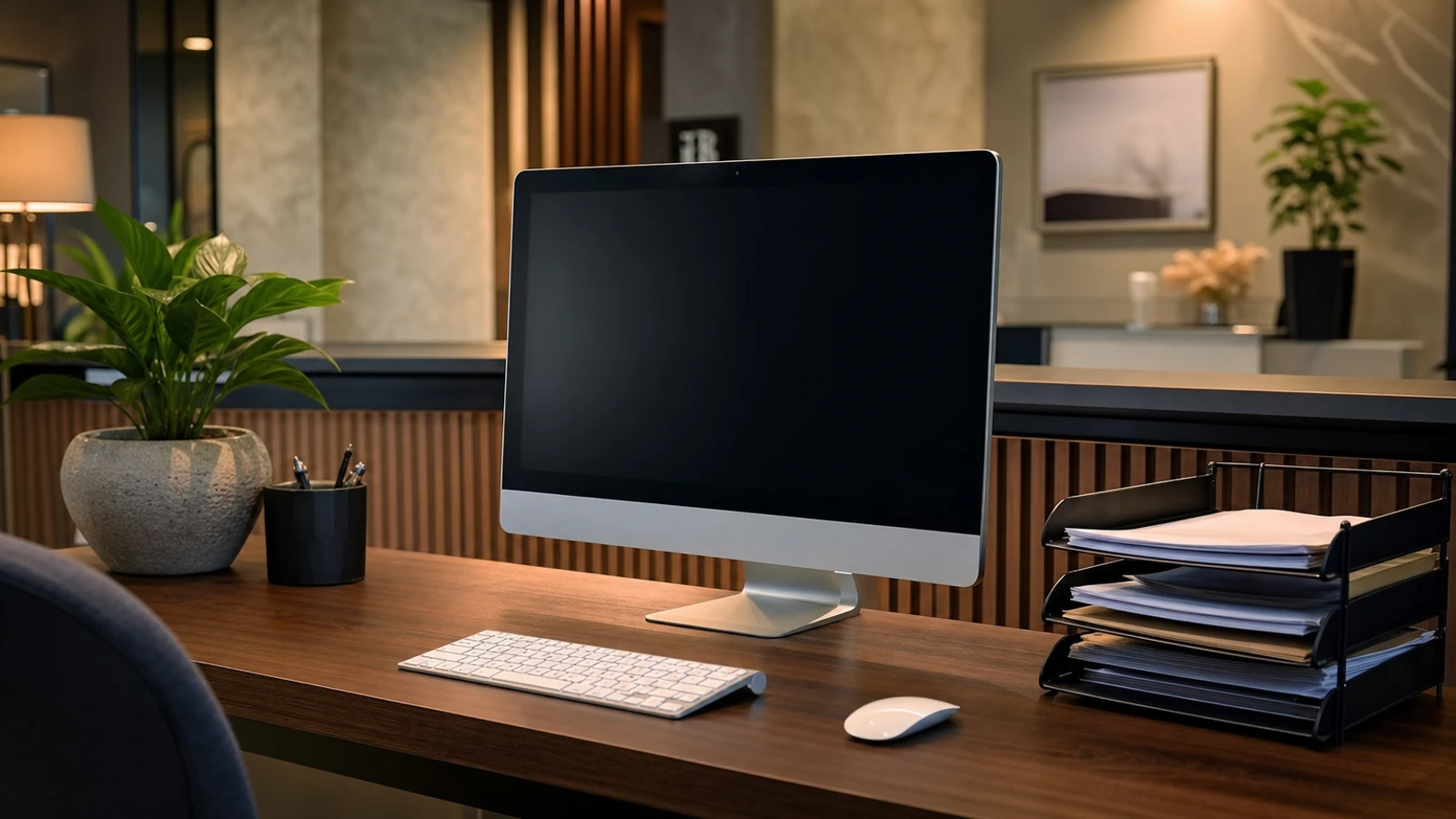
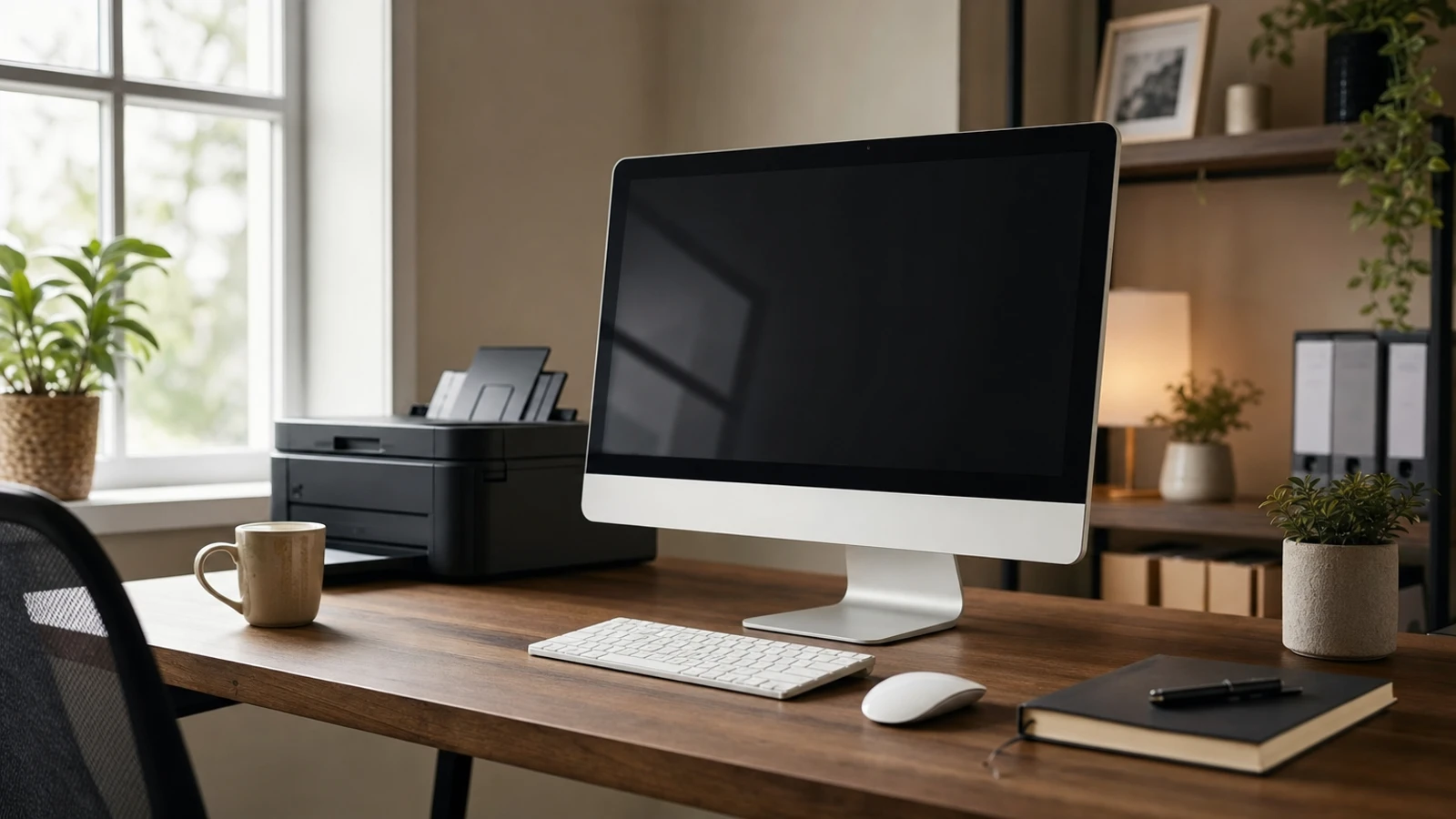
This support page focuses on camera, speakers, and video-call readiness for all-in-one office computers. The main shortlist covers products; this page keeps the setup decisions practical.
Camera, Speakers, and Video-Call Readiness
Built-in does not always mean good. All-in-ones often advertise integrated webcams and speakers, but placement, microphone pickup, and image quality vary. For client calls, check camera resolution, privacy shutter, microphone clarity, and speaker direction.
Reception calls need discretion. In public areas, loud speakers and open microphones can create privacy problems. Headset ports, Bluetooth reliability, and quick mute controls can matter more than speaker volume.
Camera angle follows screen height. If the display sits too low, video calls show an awkward upward angle. Stand adjustability or a small riser can improve both ergonomics and call presence.
Lighting beats camera specs. A good camera still needs decent room light. Plan the desk so windows, lamps, and customer traffic do not create silhouettes or glare.
Test conferencing apps early. Install the actual meeting tools during the return window. Confirm camera, microphone, speakers, headset, screen sharing, and permissions before the first important call.
Small-office decision notes
Small-business scenario 1: Built-in does not always mean good. Recheck this point against the real station because all-in-ones often advertise integrated webcams and speakers, but placement, microphone pickup, and image quality vary. for client calls, check camera resolution, privacy shutter, microphone clarity, and speaker direction. The best all-in-one should reduce clutter while keeping the office easy to run, share, clean, and support.
Desk planning cue 1. For camera, speakers, and video-call readiness, sketch the counter, customer side, printer, scanner, card reader, phone, paperwork tray, chair, outlet, and network path. If the layout makes one everyday task awkward, compare a different screen size, stand, or port arrangement.
Return-window test 1. Install real business tools, connect every peripheral, run a video call, print a sample document, restart after updates, and let the normal user try it. That trial is more useful than judging the machine from an empty desktop.
Support note 1. Write down login handoff, backup location, printer settings, service contact, and replacement plan. If camera, speakers, and video-call readiness matters to the station, simple documentation keeps the elegant computer from becoming a mystery when something changes.
Budget check 1. Compare the sticker price with the practical extras: surge protection, external backup, barcode scanner, receipt printer, privacy screen, keyboard, mouse, service plan, and downtime plan. An all-in-one is efficient only when the surrounding kit supports the way the business actually works.
Staff handoff 1. Ask whether a new employee could sit down, find the needed apps, adjust the screen, answer a call, print a form, and lock the station without special coaching. For camera, speakers, and video-call readiness, that handoff test keeps the decision grounded in small-business efficiency rather than showroom simplicity.
Small-business scenario 2: Reception calls need discretion. Recheck this point against the real station because in public areas, loud speakers and open microphones can create privacy problems. headset ports, bluetooth reliability, and quick mute controls can matter more than speaker volume. The best all-in-one should reduce clutter while keeping the office easy to run, share, clean, and support.
Desk planning cue 2. For camera, speakers, and video-call readiness, sketch the counter, customer side, printer, scanner, card reader, phone, paperwork tray, chair, outlet, and network path. If the layout makes one everyday task awkward, compare a different screen size, stand, or port arrangement.
Return-window test 2. Install real business tools, connect every peripheral, run a video call, print a sample document, restart after updates, and let the normal user try it. That trial is more useful than judging the machine from an empty desktop.
Support note 2. Write down login handoff, backup location, printer settings, service contact, and replacement plan. If camera, speakers, and video-call readiness matters to the station, simple documentation keeps the elegant computer from becoming a mystery when something changes.
Budget check 2. Compare the sticker price with the practical extras: surge protection, external backup, barcode scanner, receipt printer, privacy screen, keyboard, mouse, service plan, and downtime plan. An all-in-one is efficient only when the surrounding kit supports the way the business actually works.
Staff handoff 2. Ask whether a new employee could sit down, find the needed apps, adjust the screen, answer a call, print a form, and lock the station without special coaching. For camera, speakers, and video-call readiness, that handoff test keeps the decision grounded in small-business efficiency rather than showroom simplicity.
Small-business scenario 3: Camera angle follows screen height. Recheck this point against the real station because if the display sits too low, video calls show an awkward upward angle. stand adjustability or a small riser can improve both ergonomics and call presence. The best all-in-one should reduce clutter while keeping the office easy to run, share, clean, and support.
Desk planning cue 3. For camera, speakers, and video-call readiness, sketch the counter, customer side, printer, scanner, card reader, phone, paperwork tray, chair, outlet, and network path. If the layout makes one everyday task awkward, compare a different screen size, stand, or port arrangement.
Return-window test 3. Install real business tools, connect every peripheral, run a video call, print a sample document, restart after updates, and let the normal user try it. That trial is more useful than judging the machine from an empty desktop.
Support note 3. Write down login handoff, backup location, printer settings, service contact, and replacement plan. If camera, speakers, and video-call readiness matters to the station, simple documentation keeps the elegant computer from becoming a mystery when something changes.
Budget check 3. Compare the sticker price with the practical extras: surge protection, external backup, barcode scanner, receipt printer, privacy screen, keyboard, mouse, service plan, and downtime plan. An all-in-one is efficient only when the surrounding kit supports the way the business actually works.
Staff handoff 3. Ask whether a new employee could sit down, find the needed apps, adjust the screen, answer a call, print a form, and lock the station without special coaching. For camera, speakers, and video-call readiness, that handoff test keeps the decision grounded in small-business efficiency rather than showroom simplicity.
Small-business scenario 4: Lighting beats camera specs. Recheck this point against the real station because a good camera still needs decent room light. plan the desk so windows, lamps, and customer traffic do not create silhouettes or glare. The best all-in-one should reduce clutter while keeping the office easy to run, share, clean, and support.
Desk planning cue 4. For camera, speakers, and video-call readiness, sketch the counter, customer side, printer, scanner, card reader, phone, paperwork tray, chair, outlet, and network path. If the layout makes one everyday task awkward, compare a different screen size, stand, or port arrangement.
Return-window test 4. Install real business tools, connect every peripheral, run a video call, print a sample document, restart after updates, and let the normal user try it. That trial is more useful than judging the machine from an empty desktop.
Support note 4. Write down login handoff, backup location, printer settings, service contact, and replacement plan. If camera, speakers, and video-call readiness matters to the station, simple documentation keeps the elegant computer from becoming a mystery when something changes.
Budget check 4. Compare the sticker price with the practical extras: surge protection, external backup, barcode scanner, receipt printer, privacy screen, keyboard, mouse, service plan, and downtime plan. An all-in-one is efficient only when the surrounding kit supports the way the business actually works.
Staff handoff 4. Ask whether a new employee could sit down, find the needed apps, adjust the screen, answer a call, print a form, and lock the station without special coaching. For camera, speakers, and video-call readiness, that handoff test keeps the decision grounded in small-business efficiency rather than showroom simplicity.
Small-business scenario 5: Test conferencing apps early. Recheck this point against the real station because install the actual meeting tools during the return window. confirm camera, microphone, speakers, headset, screen sharing, and permissions before the first important call. The best all-in-one should reduce clutter while keeping the office easy to run, share, clean, and support.
Desk planning cue 5. For camera, speakers, and video-call readiness, sketch the counter, customer side, printer, scanner, card reader, phone, paperwork tray, chair, outlet, and network path. If the layout makes one everyday task awkward, compare a different screen size, stand, or port arrangement.
Return-window test 5. Install real business tools, connect every peripheral, run a video call, print a sample document, restart after updates, and let the normal user try it. That trial is more useful than judging the machine from an empty desktop.
Support note 5. Write down login handoff, backup location, printer settings, service contact, and replacement plan. If camera, speakers, and video-call readiness matters to the station, simple documentation keeps the elegant computer from becoming a mystery when something changes.
Budget check 5. Compare the sticker price with the practical extras: surge protection, external backup, barcode scanner, receipt printer, privacy screen, keyboard, mouse, service plan, and downtime plan. An all-in-one is efficient only when the surrounding kit supports the way the business actually works.
Staff handoff 5. Ask whether a new employee could sit down, find the needed apps, adjust the screen, answer a call, print a form, and lock the station without special coaching. For camera, speakers, and video-call readiness, that handoff test keeps the decision grounded in small-business efficiency rather than showroom simplicity.
Use the hub and related support pages to compare integrated-computer details before replacing or adding a business workstation.