Start with LeStallion’s active shortlist for 7 Best All-in-One Office Computers for Small Business Efficiency. This Cloudflare Pages guide adds practical buying context around screen comfort, everyday performance, video calls, ports, peripheral planning, warranty, and replacement expectations before comparing individual all-in-one computers.
How to use this all-in-one computer guide
This support hub is for small-business buyers who want a clean computer station without separating tower, monitor, speakers, camera, and cables. It does not claim hands-on testing of every current model. Instead, it turns all-in-one specifications into practical front-desk and office questions.
An all-in-one can be an efficient choice when the display is comfortable, the performance fits everyday software, the ports match the peripherals, and support is simple enough for a busy team. It can also be frustrating if the stand is rigid, the webcam is weak, or the whole workstation fails when one integrated part has a problem.
Use these notes beside the product shortlist to compare screen comfort, business software needs, calls, peripherals, warranty, and setup planning. The goal is a station that looks calm, works reliably, and stays easy to maintain after the first week.
Think about the whole office flow before choosing. Reception, bookkeeping, appointment scheduling, shipping, and meeting rooms each ask different things from an all-in-one. The right model is the one that makes the repeated work feel smooth, not just the one that looks sleek in a catalog photo.
For small businesses, efficiency is not only speed. It is fewer cable surprises, fewer support questions, easier cleaning, a screen that fits the counter, and a computer that a new employee can use without decoding a pile of adapters. Judge each machine by the real station it will improve.
Also think about replacement before purchase. If the screen, webcam, or internal computer fails, the whole workstation may be out of service. A good buying decision includes warranty contacts, backup habits, spare keyboard and mouse plans, and a clear idea of how the business keeps working during a repair.
Finally, compare the all-in-one with alternatives such as a mini PC plus monitor or a laptop dock. The integrated computer wins when it makes the desk simpler, but a separate setup may win when the business needs easier repairs, independent screen replacement, or more flexible upgrades.
This guide is meant to keep that trade-off visible before money is spent, staff routines change, and the new workstation becomes part of everyday service.
Screen Size, Ergonomics, and Front-Desk Comfort
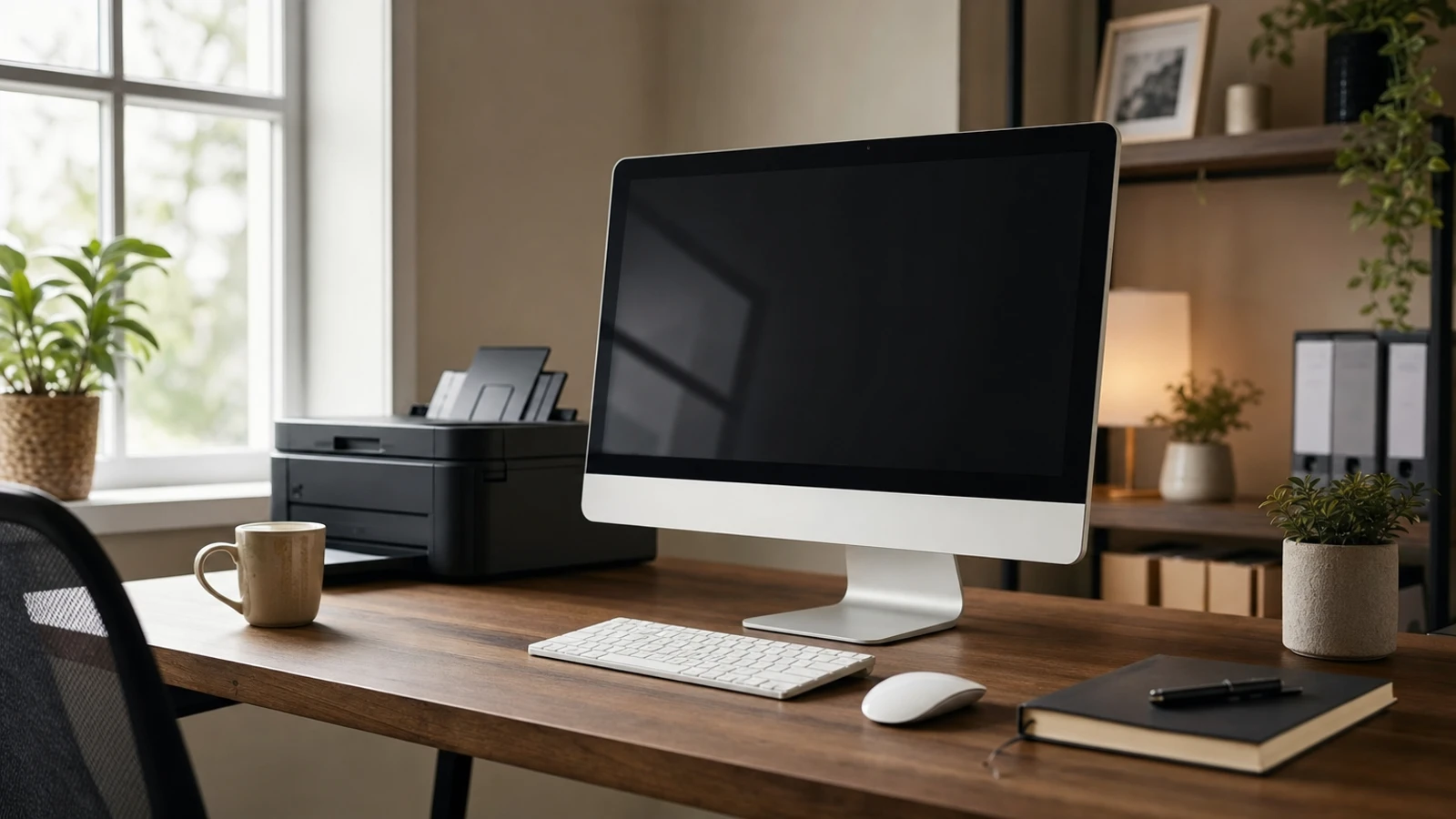
Treat the screen as furniture. An all-in-one computer puts the display, speakers, camera, and computer body in one object, so screen size changes the whole desk. A 24-inch model can suit reception counters and narrow offices, while larger screens help spreadsheets, scheduling systems, and side-by-side documents.
Height adjustment matters. Many all-in-ones look elegant but offer limited stand movement. Check tilt, height, swivel, and whether a monitor riser is needed, especially if several employees share the station.
Glare affects public-facing desks. Front desks, clinics, shops, and small offices often have windows and overhead lights. A bright display with manageable reflections can reduce squinting and awkward screen angles.
Keyboard distance still counts. Because the computer is inside the display, the screen often sits closer than a separate monitor. Leave room for keyboard, mouse, paperwork, card reader, and customer-facing items.
Shared comfort is practical. Small businesses rotate users. Choose a setup that can be adjusted quickly rather than one that only fits the person who installed it.
Processor, Memory, and Storage for Business Software
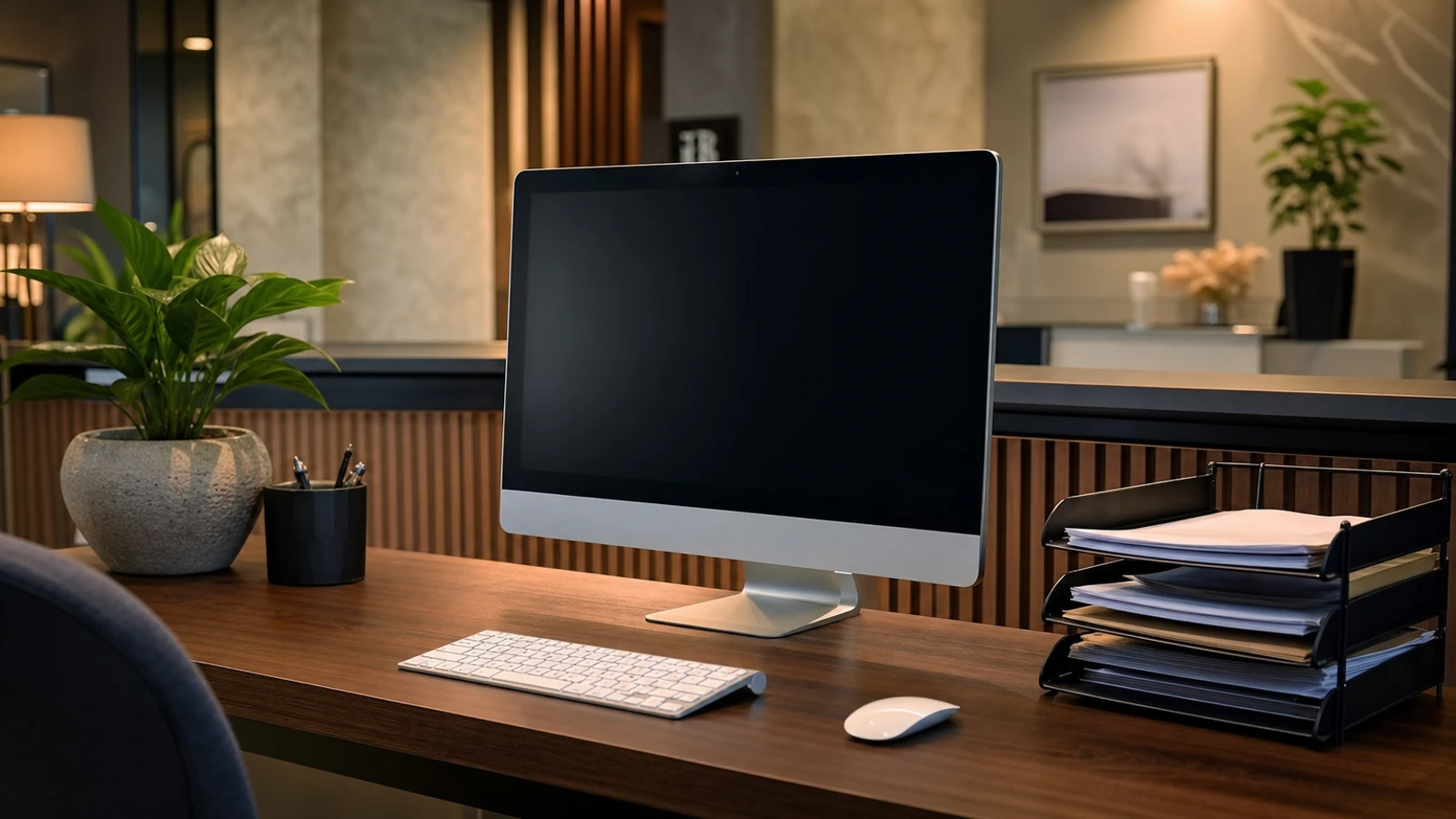
Name the daily software. Before buying, list the actual workload: browser tabs, spreadsheets, POS tools, booking calendars, accounting software, email, PDF forms, inventory dashboards, remote support, and video meetings.
Memory prevents everyday slowdown. A clean all-in-one can feel fast on day one, then struggle after updates, security software, browser tabs, and cloud sync. For business use, memory headroom is often more useful than a flashy exterior.
Storage affects workflow. Downloads, invoices, scanned forms, cached email, and local exports can fill small drives. Check capacity, cloud policy, backup routines, and whether storage can be upgraded later.
Avoid paying for the wrong power. Basic office work rarely needs gaming graphics, but underpowered chips can waste employee time. Balance processor class with real apps, warranty, quiet operation, and expected replacement cycle.
Think past setup week. A business computer gains utilities, printer drivers, remote support tools, and compliance software. Choose a configuration that can carry that normal weight without becoming a bottleneck.
Camera, Speakers, and Video-Call Readiness
Built-in does not always mean good. All-in-ones often advertise integrated webcams and speakers, but placement, microphone pickup, and image quality vary. For client calls, check camera resolution, privacy shutter, microphone clarity, and speaker direction.
Reception calls need discretion. In public areas, loud speakers and open microphones can create privacy problems. Headset ports, Bluetooth reliability, and quick mute controls can matter more than speaker volume.
Camera angle follows screen height. If the display sits too low, video calls show an awkward upward angle. Stand adjustability or a small riser can improve both ergonomics and call presence.
Lighting beats camera specs. A good camera still needs decent room light. Plan the desk so windows, lamps, and customer traffic do not create silhouettes or glare.
Test conferencing apps early. Install the actual meeting tools during the return window. Confirm camera, microphone, speakers, headset, screen sharing, and permissions before the first important call.
Ports, Printers, Scanners, and Peripheral Planning
Count every office device. Small-business desks collect label printers, receipt printers, scanners, card readers, webcams, headsets, external drives, Ethernet cables, and USB security keys. Count them before choosing a sleek machine with too few ports.
Rear ports are tidy but inconvenient. Back-facing ports make the desk look cleaner, but daily flash drives or scanner cables may need easier access. A small hub can help if it is reliable and secured.
Ethernet can save headaches. Wireless may work for browsing, but office printers, POS systems, file shares, and video calls may behave better on wired networking. Check whether Ethernet is built in or requires an adapter.
Display outputs are not guaranteed. Some all-in-ones can drive a second monitor; others cannot, or only at limited resolutions. Confirm this before promising staff a dual-screen workflow.
Cable paths deserve planning. The advantage of an all-in-one is simplicity. If the final desk has dangling adapters and power strips, revisit the port plan before buying.
Serviceability, Warranty, and Replacement Planning
Sleek can mean sealed. Many all-in-one computers are harder to upgrade than towers. Check whether memory or storage can be serviced, and whether the business is comfortable replacing the whole unit if the display or internal computer fails.
Warranty speed matters. For a small business, downtime has a cost. Compare warranty length, onsite options, return shipping, support hours, and how quickly a replacement can be arranged.
Plan around the single point of failure. Because the monitor and computer are one unit, a screen problem can remove the whole workstation. Decide whether that simplicity is worth it for the desk role.
Keep recovery details accessible. Store purchase records, admin login handoff, backup location, printer settings, and support contact details somewhere the office can find them.
Match the replacement cycle. If the station will be replaced every few years, a simple all-in-one may be ideal. If the business expects long service, prioritize support, upgrade access, and proven reliability.
All-in-One Computer Setup Checklist for Small Offices
Start with the desk role. Name the station: front desk, manager office, treatment room, classroom admin desk, shipping corner, bookkeeping desk, or meeting-room hub. The role decides screen size, ports, privacy, and performance.
Map the physical desk. Measure counter depth, viewing distance, chair position, printer location, cable route, outlet access, and whether customers can see the screen.
Install real tools immediately. During the return window, install the actual office apps, printers, scanners, meeting tools, security software, and cloud sync. Do not judge the machine from a clean desktop alone.
Check privacy and cleanup. Set screen lock timing, browser profiles, user permissions, webcam privacy, and backup routines before staff rely on the machine.
Document the setup. Label cables, save recovery notes, record service contacts, and keep a simple restart and troubleshooting checklist for whoever opens the office next.
Compare all-in-one computers after mapping the whole station
Once screen comfort, performance, calls, ports, peripherals, serviceability, and replacement planning make sense, return to 7 Best All-in-One Office Computers for Small Business Efficiency and compare current product options against the office desk they will actually support.
Final all-in-one office computer fit check
Before buying, confirm screen size, stand adjustability, processor class, memory, storage, webcam, speakers, USB needs, Ethernet, printer support, warranty, and return policy. This Cloudflare Pages support guide follows the previous Fly.io guide on mini PCs for basic office work.